Showing posts with label ASU. Show all posts

Monday, April 25, 2016

Ryan Parra


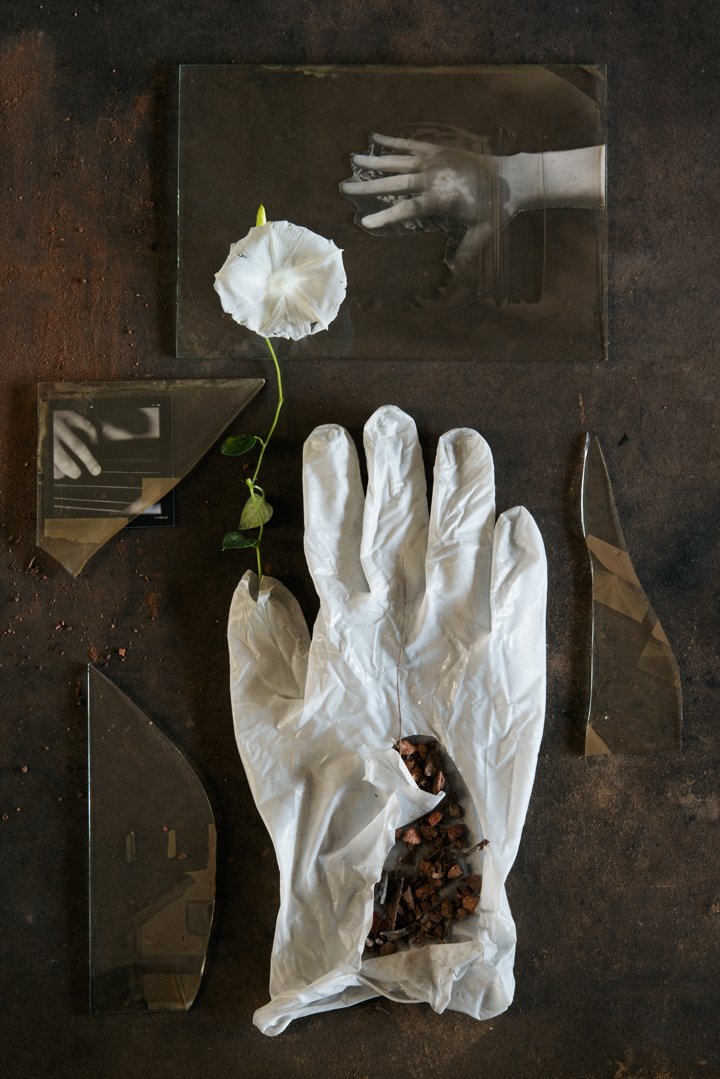
Ryan Parra is a photography based artist with a primary focus on edible, medicinal, and psychoactive plants growing in the Tempe/Phoenix valley. He earned his BFA from the University of Oregon in 2012, and MFA at Arizona State University in 2016.


Artist Statement: Vivarium

As pharmacology continues to advance, I believe it is important to have a sophisticated understanding of the plants from where it derived and knowledge of their traditional uses. My work is influenced by the rich history and current practices of ethno-botany (such as traditional shamanic practices), the history of still life paintings and plant illustrations, the exploration of plants as a system of knowledge, and the organization of agriculture for the purpose of sustaining the masses.

Urban areas continue to thrive and expand at a rapid rate, resulting in negative effects in biodiversity throughout the lands around them. As scientists are seeing a decline in biodiversity in wilderness areas, they are often finding the opposite trend in highly populated urban areas. This rise and fall of biodiversity is one of many reasons for my interest in still lifes of edible, medicinal, and psychoactive plants growing in the Tempe/Phoenix valley, as well as my focus on plants out in their natural environment. With this in mind, I hope to shed light on the rich variety and the importance of plants growing near and far from our homes. By incorporating styles from still life paintings throughout art history while also including descriptions of each plant's traditional uses, I want to remind viewers of the role plants have played in the exploration of knowledge and well being for thousands of years.

The title, Vivarium, reflects this interest in our unique relationship with nature, and sets the theme of curiosity, containment, and control. Vivarium, meaning place of life, is an enclosed space with plants or animals for observation or research purposes. For me, this act of concealing fragments of nature expresses a sense of power one has over something, much like science with nature, while also expressing great affection and love towards that same thing. It is in this binary friction that fundamental characteristics at the root of our own nature are revealed, as are issues evident in the modern perspective of the natural world.


Monday, March 24, 2014

Daniel Leivick


Daniel Leivick is an American photographer and digital artist from Santa Cruz, CA whose work focuses on human interaction with the environment, modernity and emergent phenomena. He received a BA in studio art from Stanford University in 2009 and and MFA in photography from Arizona State University in 2013. His work has been published and displayed internationally.


Heliopolis Statement

This is what they say this bird (the Phoenix) does, but I do not believe them. --Herodotus in Histories Vol. 2 Heliopolis is the city to which the Phoenix of myth periodically travels in order to experience fiery death and be reborn from the ashes. It is the name of my effort to conjure a desert city where the contrasts of our age: annihilation and transcendence, determinism and agency, rationality and madness are called into question. It is a place where destruction and rebirth are one and the same, were the gap between reality and simulation is ever narrowing. These large scale photographs, 40 generally inches on the short side, are created using collages of imagery appropriated from Google Maps to create a fictional terrain and landscape for this city. Online mapping projects like Google are rapidly changing the nature of visual discourse. No longer are we tied to the fixed perspective of a single camera; today we have access to a view akin to that of a compound-eyed god who simultaneously views all points at once. By appropriating content from these sources and transforming it into large scale imagery, I intend, at once to highlight this shift in perspective and to call into question the implications of what we are witnessing as we see a landscape that is reflective of ourselves and culture at large. The symbols which emerge here, created with ambiguous agency and meaning, echo the struggle of the individual to transcend their role in a seemingly agent-less social machine.